Regular applications for MLSSR&S 2026 are now open. Apply before 19 April (AoE).
Machine Learning Summer School on Reliability & Safety (MLSSR&S 2026) is a five-day summer school dedicated to selected topics in machine learning, with a focus on AI safety, reliability and robustness of machine learning systems.
The school is organised as an intensive academic programme built around invited lectures delivered by a carefully selected group of researchers from academia and industry, whose work has significantly contributed to the development of the field. Speakers are actively involved in current research and are invited based on their scientific contributions and expertise.
MLSSR&S 2026 continues the Machine Learning Summer School series and follows previous editions: MLSSN 2022, MLSSS 2023 and MLSSD 2025. As in the previous years, the school will take place in Kraków, Poland.




The intended audience of MLSSR&S 2026 includes:
Participants are expected to have prior knowledge of machine learning fundamentals, including supervised and unsupervised learning, optimisation methods and basic probability. Familiarity with mathematical tools commonly used in machine learning is recommended.
If you have any questions about the school, don't hesitate to contact us by email mlss@mlinpl.org.
MLSSR&S 2026 will feature lectures delivered by leading researchers and practitioners working on reliability and safety of machine learning systems. The list of speakers will be announced gradually.

Franziska is a tenure-track faculty at the CISPA Helmholtz Center for Information Security, where she co-leads the SprintML lab. Her research focuses on private and trustworthy machine learning. During her Ph.D. at Freie Universität Berlin and Fraunhofer AISEC, she pioneered the notion of individualized privacy in ML. Before joining CISPA, she was a Postdoctoral Fellow at the University of Toronto and the Vector Institute. Franziska is the recipient of an ERC Starting Grant (2025) for research on privacy in foundation models, and her work has been recognised with the Fraunhofer ICT Dissertation Award (2023), GI Junior Fellowship (2024), and Werner-von-Siemens Fellowship (2025).

Dominik Janzing is a Principal Research Scientist at Amazon in Tübingen, Germany, where he works on new approaches to causal inference for cloud computing, for example in root cause analysis of anomalies. He is particularly interested in the foundations of causal inference and in defining formal concepts that are both practically useful and domain-independent. In addition to his research at Amazon, Dominik teaches seminars on causality at the Karlsruhe Institute of Technology (KIT).

Wojciech Samek is a Professor in the EECS Department at the Technical University of Berlin and Head of the AI Department at the Fraunhofer Heinrich Hertz Institute (HHI) in Berlin, Germany. He earned a Dipl.-Inf. degree in Computer Science from Humboldt University of Berlin in 2010 and a Ph.D. (with honors) from TU Berlin in 2014. After his doctorate, he founded the Machine Learning Group at Fraunhofer HHI, which became an independent department in 2021. He is a Fellow at BIFOLD – the Berlin Institute for the Foundation of Learning and Data – and the ELLIS Unit Berlin. He serves as a member of Germany’s Platform for AI and sits on advisory and executive boards including the WUT Center for Credible AI, AGH University’s AI Center, IDEAS Research Institute, HEIBRiDS, and the DAAD Konrad Zuse School ELIZA. His research focuses on explainable AI (XAI), spanning methods, theory, and applications, with pioneering contributions including Layer-wise Relevance Propagation (LRP), concept-level explainability, evaluation of explanations, and XAI-driven model and data improvement. He has served as Senior Editor of IEEE TNNLS, Associate Editor for several journals, and Area Chair at NeurIPS, ICML, and NAACL. He has received multiple best paper awards (Pattern Recognition 2020, Digital Signal Processing 2022, IEEE SPS 2024, Information Fusion 2025), has co-authored over 250 peer-reviewed papers, and was recognized as a Highly Cited Researcher 2025 by Clarivate.

Adam is a faculty member at CISPA Helmholtz Center for Information Security, co-leading the SprintML group. His research is focused on secure and trustworthy Machine Learning. Adam was a Postdoctoral Fellow at the Vector Institute and the University of Toronto, and a member of the CleverHans Lab, advised by Prof. Nicolas Papernot. He earned his PhD at the University of Chicago, where he was advised by Prof. Sanjay Krishnan and worked on input and model compression for adaptive and robust neural networks. Adam obtained his Bachelor's and Master's degrees from the Warsaw University of Technology in Poland. He was also studying at DTU (Technical University of Denmark)and carried out research at EPFL, Switzerland. Adam also worked at CERN (Geneva, Switzerland), Barclays Investment Bank in London (UK), Microsoft Research (Redmond, USA), and Google (Madison, USA).
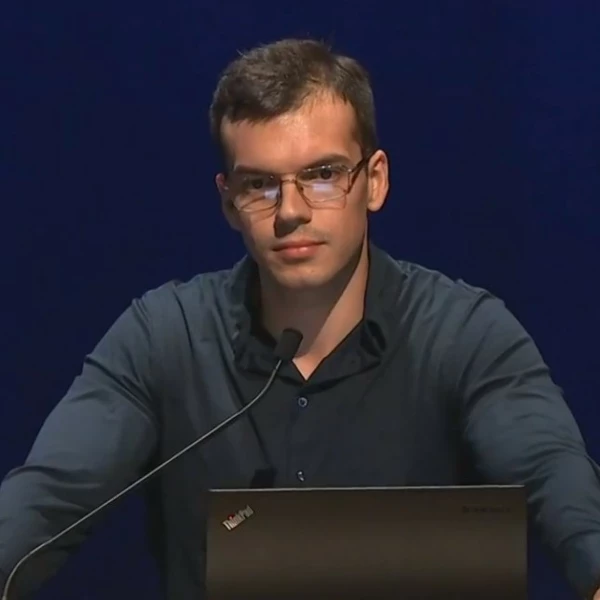
Randall Balestriero is an Assistant Professor of Computer Science at Brown University in Providence, where he leads the Galilai Group. He has been doing research in learnable signal processing since 2013, in particular with learnable parametrized wavelets which have then been extended for deep wavelet transforms. The latter has found many applications, e.g., in NASA's Mars rover for marsquake detection. In 2016, when joining Rice University for a PhD with Prof. Richard Baraniuk, he broadened his scope to explore Deep Networks from a theoretical perspective by employing affine spline operators. This led him to revisit and improve state-of-the-art methods, e.g., batch-normalization or generative networks. In 2021 when joining Meta AI Research (FAIR) for a postdoc with Prof. Yann LeCun, he further enlarged his research interests e.g. to include self-supervised learning or biases emerging from data-augmentation and regularization leading to many publications and conference tutorials.
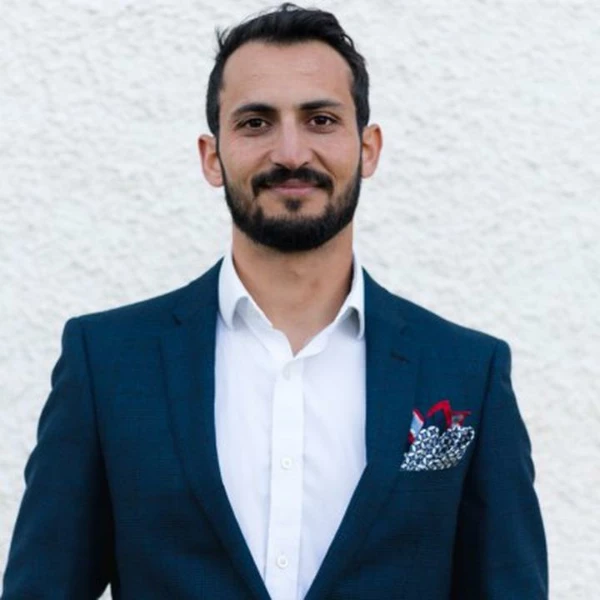
Fazl Barez is a Senior Research Fellow at the University of Oxford's Martin AI Governance Initiative, where he serves as Principal Investigator leading research on AI safety, interpretability and governance. His work focuses on mechanistic interpretability of large models, safety evaluations, deceptive behaviours, and techniques such as model editing and machine unlearning. A central theme of his research is moving from observing model behaviour to understanding and systematically improving it. Alongside his academic work, Fazl is involved in Martian, an independent research group focused on understanding machine intelligence from first principles. The team brings together researchers with experience across major AI labs, including Anthropic, Google DeepMind, and Meta, combining frontier-model research with long-term safety perspectives. His broader experience spans academic research, frontier AI labs, and international initiatives on AI risk and reliability – a perspective closely aligned with this year’s focus on reliability and safety.

Dr. Alexandra Gomez-Villa is an Assistant Professor at the Universitat Autònoma de Barcelona, Spain, where she is a member of the Computer Vision Center. Her research focuses on emergent properties in foundation models, continual learning, and generative image models. She completed her PhD at the Computer Vision Center, with previous research positions at Universitat de València and Universitat Pompeu Fabra. She has published in leading venues including CVPR, NeurIPS, ICLR, and ECCV, with over 1140 citations.
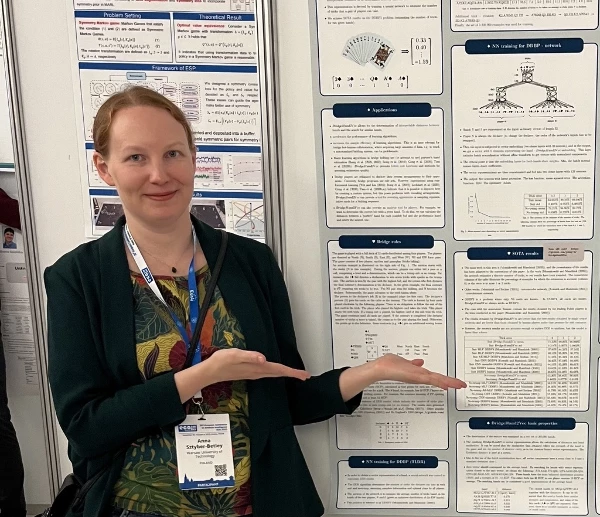
Anna Sztyber-Betley is an assistant professor at the Institute of Automatic Control and Robotics, Faculty of Mechatronics, WUT. She is an enthusiast of AI and ML education. Recently cooperates with Truthful AI (Berkeley) on AI Safety projects.

Jan worked as a software developer for over a decade before shifting to AI safety in 2023. He is an ARENA and Astra Fellowship alumni, interested in anything related to out-of-context reasoning in LLMs. Currently works as an independent researcher with Truthful AI, Berkeley.
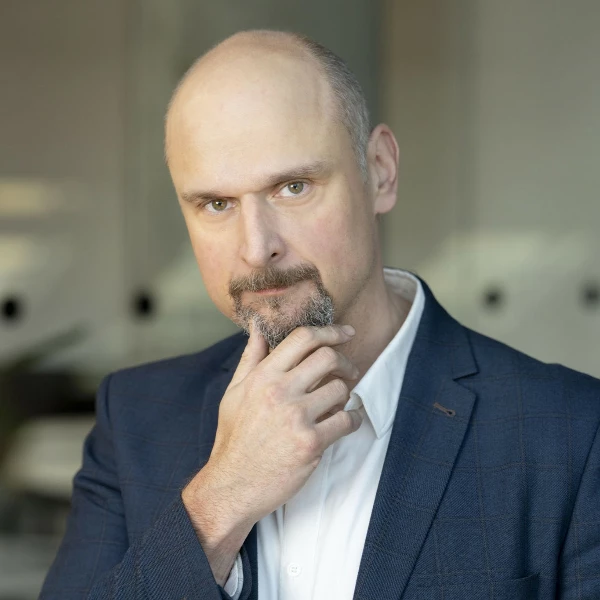
Tomasz Michalak is a lecturer at the Faculty of Mathematics, Computer Science and Mechanics of the University of Warsaw. During his academic career, he conducted research at the Department of Computer Science at the University of Oxford, at the School of Engineering and Computer Science at the University of Southampton, at the Department of Computer Science at the University of Liverpool and at the Department of Applied Economics at the University of Antwerp. He is a graduate of the Faculty of Economic Sciences at the University of Warsaw. He received his PhD in economics from the Faculty of Applied Economics of the University of Antwerp. Member of ELLIS Society. His research interests include artificial intelligence, social networks, fintech and cybersecurity, computational social sciences, multi-agent systems and game theory. Currently, he conducts research on applications of game theory in networks and issues related to security and machine learning. He is the leader of the AI Strategy Lab at the IDEAS Research Institute and member of the ELLIS Unit Warsaw.

Wojciech is an Assistant Professor at NASK National Research Institute in Warsaw, Poland, where he leads the NLP Department. His work focuses on building safe and trustworthy language technologies, with a current emphasis on developing PLLuM – an open Polish large language model designed for reliability and critical applications, including public sector use. Wojciech earned his PhD from TU Wien and was a Marie Skłodowska-Curie Research Fellow in the EU Horizon 2020 DoSSIER project. He has also been a visiting researcher at University College London and the University of Queensland.

Kamil Mamak is an Associate Professor, philosopher, and a legal scholar at the Jagiellonian University. He is an ERC laureate (Starting Grant). He was a postdoctoral researcher at the RADAR: Robophilosophy, AI Ethics and Datafication research group at the University of Helsinki in 2021-2024. He is also a Member of the Board of the Cracow Institute of Criminal Law. He holds PhDs in law (2018) from Jagiellonian University and philosophy (2020) from the Pontifical University of John Paul II in Krakow. He has authored five book monographs, including "Robotics, AI and Criminal Law: Crimes against Robots" published by Routledge in 2023 and "Ethics in Human-like Robots" (Routledge) published in 2024. His sixth book, "AI Ethics: An Introduction" (in Polish), is under contract with Copernicus Center Press. He has published more than 60 peer-reviewed journal articles and contributed chapters. His works were published in international journals, including Philosophical Studies; Topoi; Episteme; Oxford Intersections: AI in Society; AI & Society; Ratio Juris; Ethics and Information Technology; Journal of Criminal Justice; European Journal of Criminology; International Journal of Social Robotics; Medicine, Healthcare, and Philosophy; Science and Engineering Ethics; European Journal of Crime, Criminal Law and Criminal Justice; Frontiers in Robotics and AI, and Criminal Justice Studies. He received a research grant from the National Science Center in Poland. He is a recipient of the Minister’s Scholarship for Outstanding Young Scientists and the Scientific Award of "Polityka" weekly 2023 (in the category: philosophy/law).

Adel Bibi is a Senior Researcher in machine learning and computer vision at the Department of Engineering Science, University of Oxford. He also serves as an R&D Distinguished Advisor at SoftServe and is a member of the ELLIS Society. He received his MSc and PhD from King Abdullah University of Science and Technology (KAUST) in 2016 and 2020, respectively. His work has been recognized through several competitive awards, including the KAUST CRG Award for research on robust deep learning, an Amazon Research Award (2022) in the Machine Learning Algorithms and Theory track, the Google Gemma 2 Academic Award (2024), and a Systemic AI Safety grant from the UK AI Security Institute (2025), as well as grants from Toyota and Coefficient Giving in 2025. Adel has received five best paper awards, including an Outstanding Paper Award at the LASS Workshop (CIKM 2025), as well as awards at workshops affiliated with NeurIPS 2023, ICML 2023, and CVPR 2022, and earlier recognition at the Optimization and Big Data Conference (2018). His research has also attracted media attention, with coverage in outlets such as Scientific American, NBC News, and The Guardian, among others.














Until the detailed program for MLSSR&S 2026 is announced, the outline below describes the format of the previous edition of the Machine Learning Summer School.
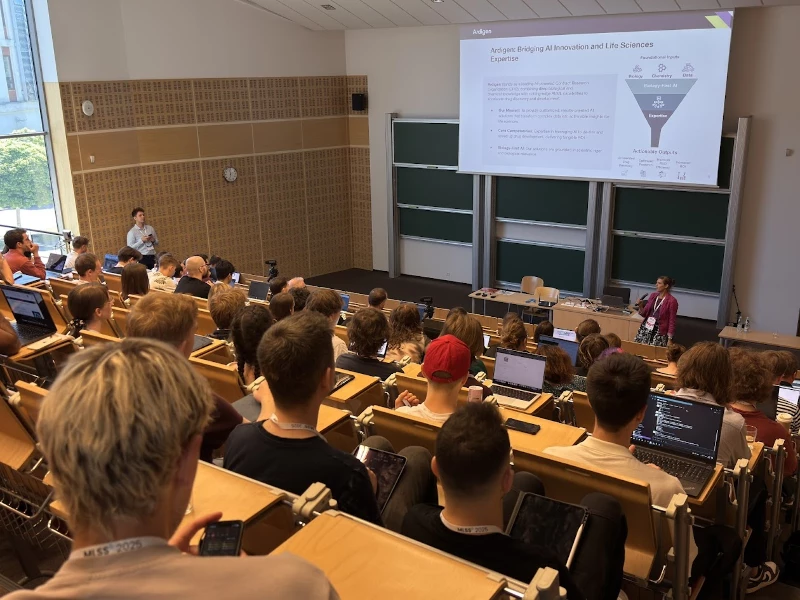
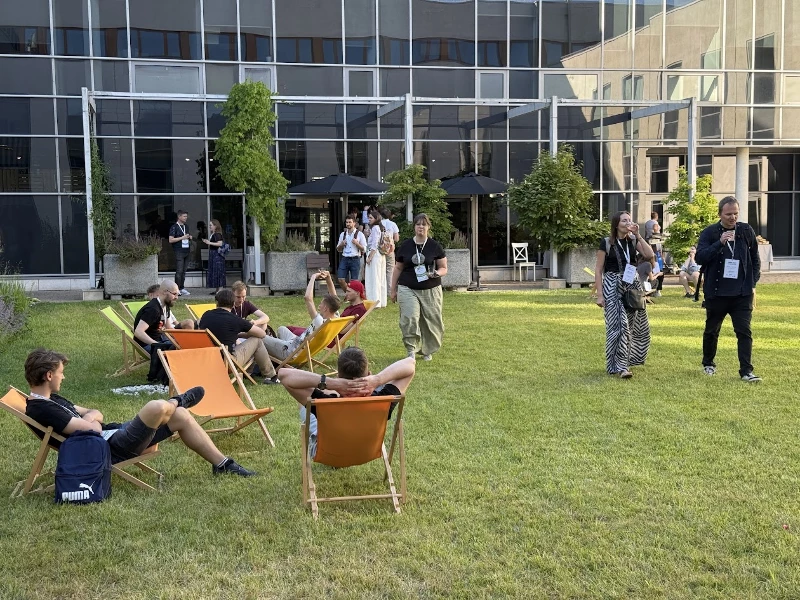
A lecture-based program with invited speakers from academia and industry. Several lectures scheduled each day.
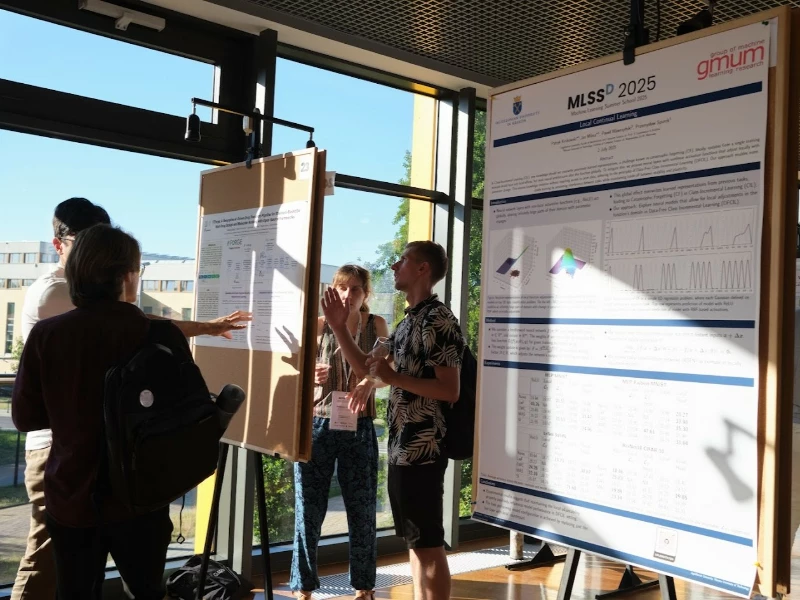
A dedicated poster session, allowing participants to present their work and discuss it with other attendees and speakers.
Each day follows a structured schedule with lecture blocks, coffee breaks, and a lunch break, providing time for questions and discussion.
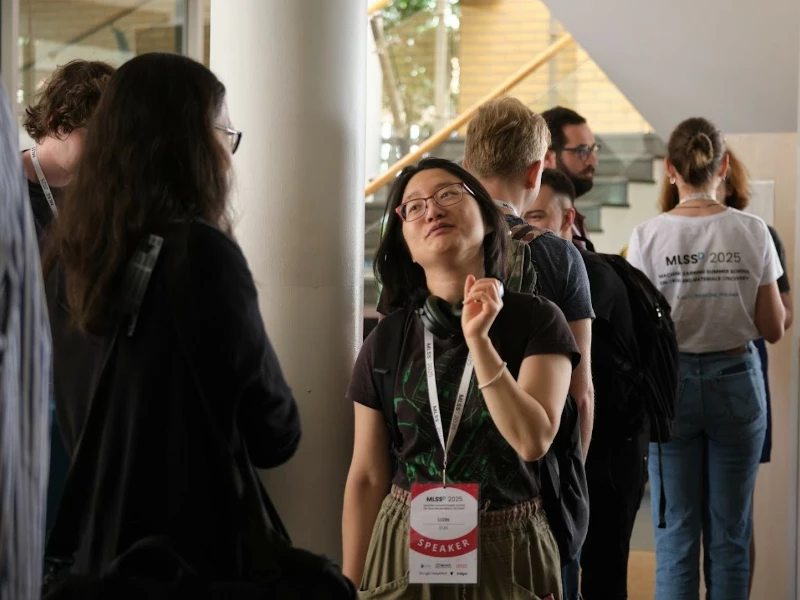
The program including social events organized alongside the academic schedule, offering informal opportunities for interaction among participants.
invited lectures
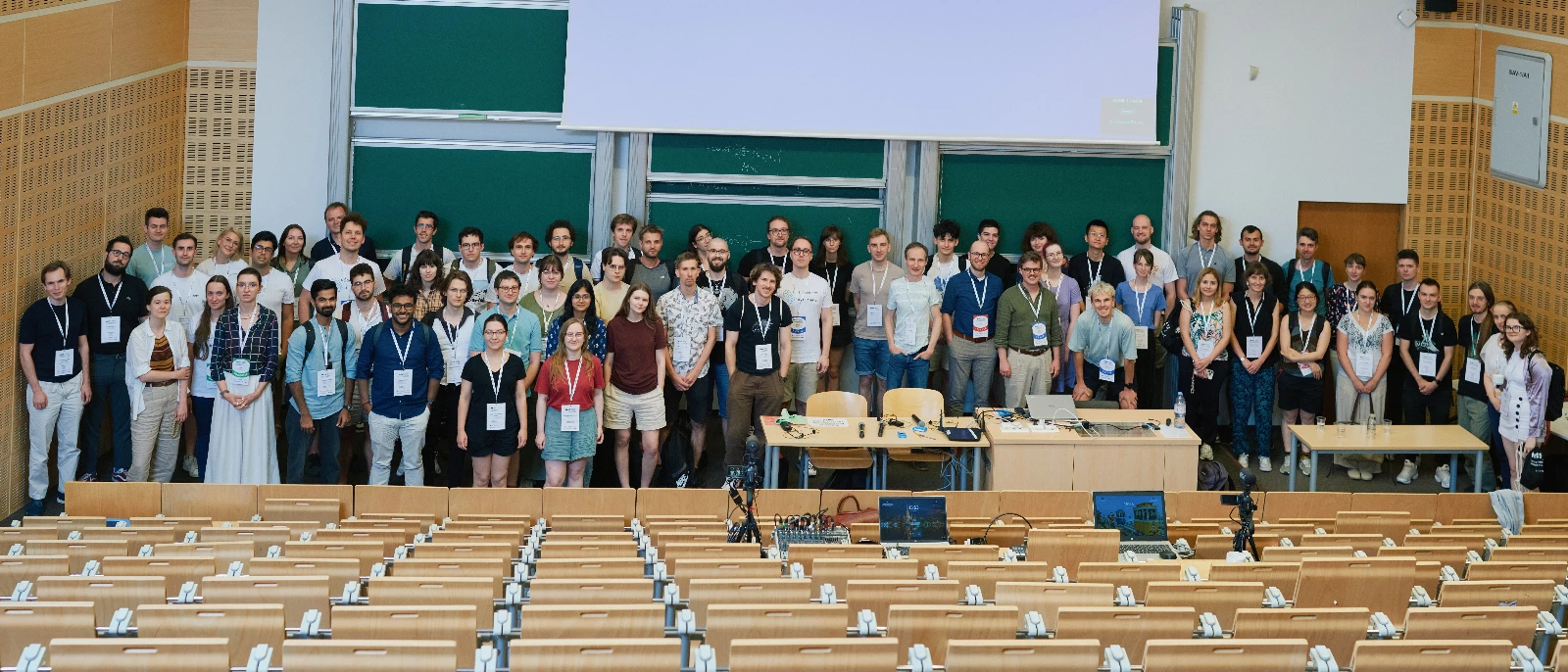
participants
Poster session
Social events
9 February
Early Bird application opens
8 March (AoE)
Early Bird application closes
9 March
Regular application opens
22 March
Early Bird acceptance notifications
19 April (AoE)
Regular application closes
30 April
Regular acceptance notifications
16 May (AoE)
Deadline for paying the registration fee
29 June - 3 July
MLSSR&S 2026

The summer school is held at Jagiellonian University. On the first day, 29 June, it takes place at Collegium Novum, the main building of the university.
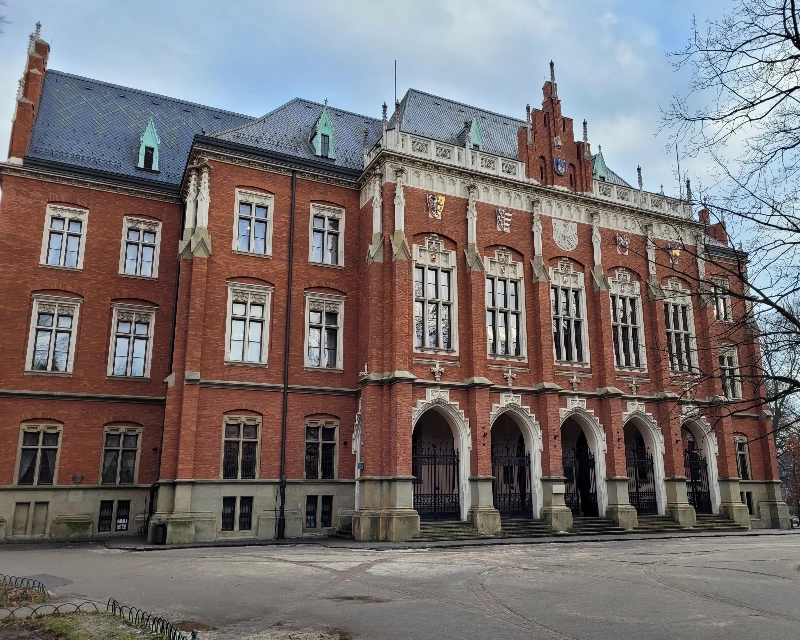
On the remaining days, 30 June - 3 July, the venue shifts to the Faculty of Mathematics and Computer Science, Jagiellonian University.
Become a sponsor of our summer school and support the next generation of machine learning researchers. Please get in touch with us at mlss-sponsors@mlinpl.org to discuss sponsorship opportunities.
Connect with over 100 selected students and early-career researchers
Get direct academic and technical visibility with a sponsored talk or hands-on session
Get prominent exposure across event channels




Jagiellonian University is one of Europe's oldest research universities and a leading academic center in AI.

GMUM is a ML research group at JU, active in AI safety, computer vision, and modern ML methods.

ML in PL Association organizes major ML events in Poland and connects researchers with industry.
IDEAS RI is Poland’s largest applied-AI research center, supporting innovation and bridging academic research with industry.

ELLIS Unit Warsaw is part of the European ELLIS network, advancing research in trustworthy, robust, and efficient Al.

JCAI brings together researchers across Jagiellonian University to unify and accelerate AI research, fostering interdisciplinary collaboration and real-world impact.

Project Leader

Co-Project Leader

Co-Project Leader

Registration

Program


Program

Program

Program

Program

Marketing

Marketing

Marketing

Finance

Sponsors
Sponsors

Website
If you have any question about the event don't hesitate to contact us by email or via our social media: